Pages

Monday, May 18, 2015

Whats Fermenting? Dandelion Wine!

This bowl is bigger than it looks and I am just doing a test this year by making about a 1/2 gallon of wine.
I have always wanted to make dandelion wine but am allergic to brewers and bakers yeast, so wasnt sure how to go about it. Grapes apples and pears will ferment with just the wild yeasts on their skins. I didnt know if dandelion had natural yeasts or where the sugar was going to come from for yeasts to eat since dandelions are not sweet, but this year we have honey from our bees and honey will ferment. Will this technically be a dandelion meed? Maybe, but I am doing it.
First I needed just the petals so my "wine" wouldnt be bitter.
After trying various methods, I arrived at this one. I cut just above the stem and just below the flower.
This is what was left...
 
and I just peeled it off.  Some came easier than others.
Once I had my petals I put them in water with honey and orange zest etc. and put it in the sun for 3 days to make a sun tea. All recipes on line boiled the tea and added yeast when it cooled so I am out on my own limb here. Deirdra Heekan who owns la garagista(as she says a woman who makes wine in her garage?) and wrote the book An Unlikely Vineyard writes about a woman farmer she met in Italy who encouraged her "to swim against the current." This is what I seem to do whether difficult or productive or not. I am determined to make food and drink from basic elements. I want it to be healthy and tasty as well as hearty unique and full of life. I dont need or want it to be consistent which to me compromises the organic essence of living food. The full title of Deirdra's book is An Unlikely Vineyard The Education of a Farmer and Her Quest for Terroir. To Deirdra dandelions are a sign that the soil is compacted because they help break up and irrigate the earth. Her "quest" is similar to mine but I am more of a gatherer than a farmer.  Though my search also is for food healthy living soil. Earth untreated and wild, maybe unpredictable, but trustworthy in that nature knows how to create life. A dandelion that many kill in hopes of the perfect green lawn, to me is food with the most life force energy possible. Food closest to being alive is said to have more of this life force energy. Soil if not chemically treated is overflowing with life. I would like food from this kind of soil rather than soil killed and enriched with chemicals. And I would like to let plants offer me what they come with. If I control the process by boiling and killing what exists, and then add a product that gives me consistency in outcome, I miss out on what nature is offering me in this moment in time. And also if I dont try this experiment I have to give up wine since I am allergic to its additional ingredients.

While I was looking for and not finding a natural way to make flower wine, I ran across a recipe for dandelion petal cookies.
I had the dandelions in the yard and developed the petal releasing method so why not? Yum and healthy too when adapted using a nutritious sweetener and adding some mineral rich arrowroot flour.

Saturday, May 16, 2015

In the Orchard

Plenty of blossoms and plenty of winter moths.
The larger tree bore fruit 2 years ago. But the moths are bad this year again so will have to wait and see how it does this year.
The little peach tree wants to flower and fruit like last year.
The new trees are getting water, and may end up getting a dose of neem and fish emulsion so we dont lose them to the moths.
They are leafing out.

Daily Harvest from the Kitchen Garden 5/16/15

1st year wild garlic-its slimy in 2nd year- and mint lemon balm and oregano became a fantastic meal with jasmine rice.

In the garden

Asparagus
Onions
Wild Garlic flowering in its 2nd year
Brassica (Flowers for Bees)
Strawberry Flowers
Dandelion Universe

Monday, April 27, 2015

Planting Cider Apple Trees

The day appearing ominous
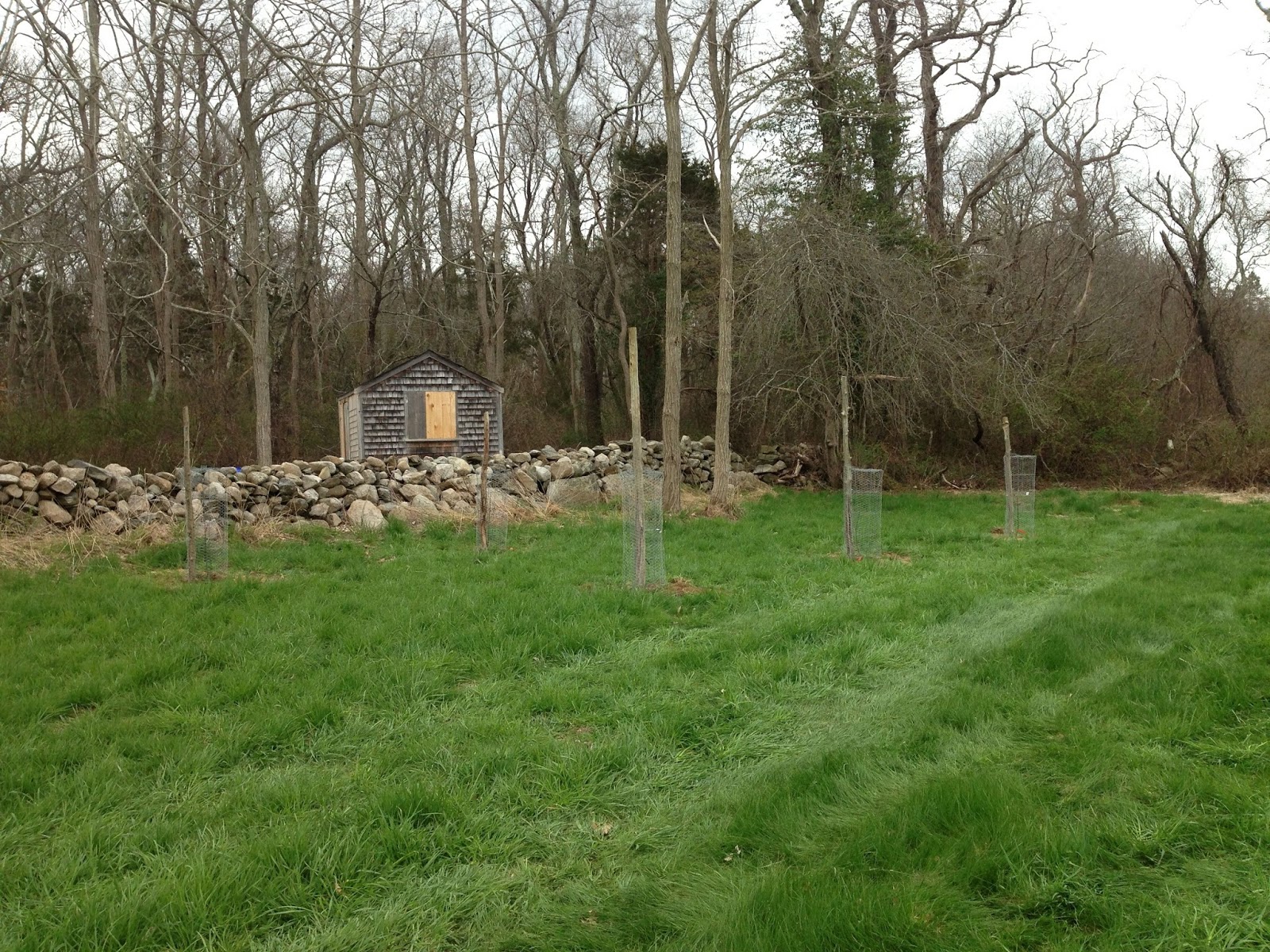
did not stop us from planting apple trees.
The little whips seemed so small next to the posts.

So sad we had to cage them to protect them from deer.
It was just starting to rain as we finished. Perfect for settling them in.

Tools...

Homemade Bed Shaper 
For shaping beds to plant rows of seedlings.
New Holland 254


This is a combination tedder and rake. The farmer has a new machine that rakes, but if he has to ted, or turn the hay over to dry what was underneath, this is what he uses.

Sunday, April 26, 2015

Forsythia and Chickweed

Forsythia blooming yellow
more greens
 Time to plant the apple trees...
...so we heeled them in until tomorrow.

Friday, April 24, 2015

And then everything just turned green.

Green Fields

Honey at Last

Some of it was light and fresh,
and some was darker and thicker. We started to realize how beekeepers could distinguish honey from different flowers.
Being New-Bees, we just scraped it off and
mixed it all together to strain off the honey and save the wax for candles.
What amazing things they create!
I know bees will reuse comb and it is less work for them, but after seeing the old dark comb-see earlier post-I decided to crush and strain rather than extract. This way they will have fresh new comb. In the future maybe we can let them reuse newer looking comb for a while.

Monday, April 13, 2015

spring planting by the farmer

Arriving from the green house are the spring onions and turnips overwintered in sand.
These macombers are for seeds.

Spring forage for Bees

We finally spotted the skunk cabbage
emerging from the mud.
I tried to see if it was ready for the bees to work on. Early spring forage for bees along with
maple blossoms and crocus are springing out.

Sunday, April 12, 2015

Collecting seeds

I took them from the garden,
to prevent them from reseeding there,
to bring them to the city to grow on my new fence.

Monday, April 6, 2015

Mud Season and Musing on Bees

Yesterday we went down to take a peek at the hives. The wind was cold so we didnt want to open it, but one of the hives(on the left) had flies near the entrance. I had been seeing bees going in and out all spring, but the flies I felt were a bad sign. This hive was way less active than the other one, so I have suspected for quite a while the stronger hive was marauding the honey of this hive and those were the bees I was seeing. I didnt expect there to be any bees alive in there, so today we took it apart to examine it.
We found dead bees in this pattern on the quilt...
...in this pattern on the honeycomb, and many on the bottom. It looked like they froze,
but this old come was really suspicious. The bees came from the apiary on this frame. I would never reuse it. Its way to old and dark. I feel they need fresh comb to be healthy.
We also wondered if they were trying to raise a new queen for a while, because there were several of these.
All, musty looking. There was still honey left. Whether they could all get to it is debatable, but some were very near it when they died.

The hive that I assume has been marauding it, for I am not sure how long, is still alive. We are going for strong healthy bees that can survive this climate on their own. It is very hard not to feed them and if we break down and do it, it will be honey anyway, so I am trusting them to use the honey of this dead hive if they need it. I am hoping this hive had no diseases. I did not see any mites which I can theorize was due to the cedar quilt, however, this is all new to me. It may seem harsh, but it is not easy to have these convictions. I want my hives to live. The one that we lost, I did not expect to make it through the winter because it went into the winter weaker than the other.

It is not easy to have access to sugar and not use it. I just strongly believe that it weakens their immune systems. I also have an inherent trust in their intelligence which I value more than my own, for their sake, especially since I know literally very little about beekeeping. I felt that if I tried to combine the hives I could be sacrificing the stronger hive. I feel that the ones that can make it are ones that should make it and will be strong. I do not want to compromise the wild pollinators on this farm. They have been surviving here. It would be a terrible shame to bring disease to them. Obviously I am not trying to have a commercial honey operation here or I might have to make different decisions. My goal is to, through survival of the fittest and a hands off approach to beekeeing, allow a healthy population of honey bees that coexist with wild pollinators. Hopefully we will get some honey too because the rest of the family wants it.
Soon there will be skunk cabbage and maple blossoms. Now we only have a few crocuses and the bees seem to be interested in pine sap-not sure for what-and possibly the honey from the dead hive.